


Fire and rescue
Reliable, always-on IT solutions for fire and rescue services that keeps crews ready, control rooms connected, and communities protected.

Fire and rescue services operate in environments where seconds matter and failure is not an option. The technology that supports a fire and rescue service must be reliable, secure, and ready at all times. This covers the control room, the appliance bay, incident command, and prevention and protection.
Phoenix works with fire and rescue services to deliver IT solutions that reflect the reality of the operational environment. We understand that this is not a sector that responds to promises. It responds to evidence, track records, and technology that has been proven to perform when it matters.
Phoenix covers managed IT services, cyber security, infrastructure modernisation, and data solutions. We are a partner that shares your commitment to operational readiness and community safety.
Addressing the challenges of fire and rescue

Maintaining always-on IT systems that support operational readiness and rapid incident response at all times
Protecting sensitive operational data and critical communications infrastructure from cyber threats
Improving interoperability between fire and rescue services, police, and ambulance through joined-up technology
Supporting on-call resilience and effective crew management with reliable, accessible systems
Delivering the community risk management and prevention work that keeps people safe, underpinned by good data
Managing ageing infrastructure and tight budgets while meeting the demands of a modern, digital fire service
Our public safety customers





Hear from our customers
West Yorkshire Fire and Rescue Service
West Yorkshire Fire and Rescue Service leverages Microsoft Copilot to empower colleagues across the service, improving accessibility and efficiency.
“Copilot is my best, most knowledgeable friend. Not only does it give me the jumping off point whenever I need to create a new document, it is able to tailor that document to our specific requirements for formatting, style etc.”
Steve Briddon, Watch Manager, West Yorkshire Fire & Rescue Service
Supporting fire and rescue with a range of IT solutions
Fire and rescue services need technology that is as dependable as the crews it serves. Phoenix’s managed IT services provide responsive, expert support. Systems stay running, issues are resolved quickly, and your IT team is free to focus on what matters most. For services with on-call and shift-based operations, we understand that support cannot be a nine-to-five function.
Explore our managed IT services
Critical national infrastructure demands the highest standards of cyber security. Fire and rescue services are increasingly targeted, with control room systems, operational data, and communications infrastructure all representing high-value targets. Phoenix helps services implement reliable, layered security controls.
Discover our cyber security solutions
Reliable infrastructure is the foundation of operational readiness. Phoenix helps fire and rescue services modernise their IT infrastructure. We improve the resilience, performance, and connectivity of systems that support incident command, control room operations, and back-office functions. Whether moving to cloud, refreshing on-premises systems, or designing a hybrid approach, we bring the expertise to deliver it safely.
Explore cloud and infrastructure solutions
Data is central to modern fire and rescue. It supports community risk management, prevention planning, operational performance reporting, and resource allocation. Phoenix helps services manage their data more effectively. Watch managers and chief fire officers get the information they need to make better decisions and demonstrate impact.
Explore our data and analytics solutions
Fire stations, control rooms, and operational facilities require physical security that is proven and reliable. Phoenix provides CCTV, access control, and perimeter security solutions that protect your people and premises. These integrate with your wider IT and security environment and meet the specific needs of operational fire and rescue settings.
Explore our physical security solutions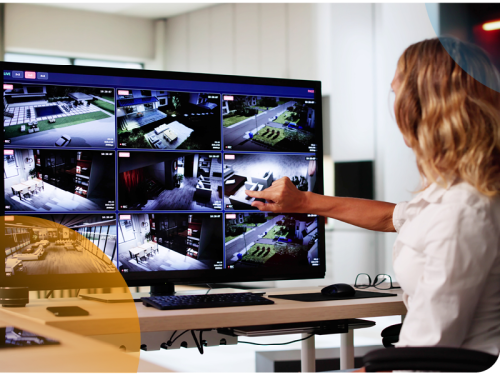
AI has the potential to support fire and rescue services. Use cases range from predictive risk modelling to operational planning and resource management. Phoenix helps services explore AI in a careful, evidence-based way. Any adoption must be proportionate, explainable, and aligned with the ethical standards of a fire and rescue service.
Explore our AI capabilities
Phoenix as a Microsoft partner
Phoenix is one of the UK’s most recognised and accredited Microsoft partners. We work with blue light and public safety organisations across the country. Our Microsoft capabilities cover Modern Work, Azure, and advanced security solutions. All are deployed with a deep understanding of fire and rescue operational environments.

True partnerships. Remarkable outcomes.






















































Fire and rescue FAQs
Fire and rescue services require IT systems with very high levels of resilience, because downtime can directly impact emergency response. Reliability is typically achieved through proactive system monitoring, high-availability infrastructure design, and strong incident response processes.
Key measures include identifying and removing single points of failure, implementing redundancy across critical systems, and ensuring robust disaster recovery and backup arrangements are in place. The aim is to maintain continuity of operations even during hardware failure, cyber incidents, or major outages.
Interoperability between emergency services depends on secure, standardised ways of sharing data across different systems and organisations. This often involves integrating legacy platforms, aligning data governance approaches, and using secure communication tools that allow real-time or near real-time information exchange.
Successful interoperability also requires clear agreements on data sharing, strong cyber security controls, and solutions designed to support collaboration without compromising sensitive information or operational security.
Modernising IT infrastructure in fire and rescue services typically involves reviewing existing systems, identifying ageing or high-risk components, and developing a roadmap for change. This can include moving from legacy on-premises systems to more scalable cloud or hybrid environments.
A typical modernisation programme covers assessment of current infrastructure, prioritisation of critical upgrades, procurement of new solutions, implementation planning, and ongoing support. A phased approach is often used to reduce operational risk and ensure continuity of emergency services throughout the transition.

Talk to our fire and rescue specialists
Our specialists work directly with fire and rescue services across the UK. Book a free call to discuss your service’s IT priorities.