

NHS data analytics and operational intelligence
NHS organisations are generating more data than ever. Healthcare services see around 1 million patients every 36 hours, with almost every interaction generating a digital record.

The challenge isn’t the data. It’s turning that data into decisions that reduce pressure on teams and improve care for patients.
Phoenix helps NHS trusts, ICBs, and wider healthcare organisations do exactly that. As a Microsoft partner with deep healthcare experience, we help you move from data complexity to clarity.

Your data challenge
Data that sits in disconnected systems doesn’t drive better decisions. Many organisations have the data needed to improve flow and patient outcomes, but their view of the data is incomplete. Organisations like yours are struggling with:
- Having no single view of performance across departments or sites
- Real-time operational information that isn’t actually real-time
- Data quality issues that undermine confidence in reports and dashboards
- Analytical capability that can’t scale to meet growing demand
- Difficulty demonstrating outcomes to commissioners and system partners
If any of that sounds familiar, you’re not alone (and there’s a solution!).

A modern analytics platform built for NHS scale
Phoenix is a Microsoft partner with specialist capability across the data and AI stack. For NHS organisations looking to build or modernise their data platform, we work primarily with two technologies.
Microsoft Fabric is Microsoft’s unified analytics platform, bringing together data engineering, real-time analytics, data science, and business intelligence in a single environment. For NHS organisations, that means fewer tools to manage, less time spent moving data between systems, and more time generating insight.

Microsoft Azure underpins the whole platform. Azure provides secure, compliant storage and processing for NHS data, built to meet Data Security and Protection Toolkit (DSPT) and UK GDPR requirements. Whether you’re consolidating legacy systems, building from scratch, or connecting data sources for the first time, Azure gives you a reliable foundation to build on.
Learn more about Microsoft Azure
See what’s happening as it happens: operational insights from data
Waiting for a weekly report to understand yesterday’s bed occupancy isn’t useful when patient flow decisions need to be made right now. Real-time operational intelligence changes that.
By connecting operational data sources (electronic patient records, bed management systems, A&E systems, theatre scheduling, etc) into one analytics environment, your teams get a live picture of what’s happening across the organisation.
This gives the right people the right information at the right time and reduces the operational firefighting that consumes so much management capacity in NHS organisations today.

The benefits of predictive analytics
Predictive analytics uses your historical operational data to model what’s likely to happen, giving your teams time to act rather than react.
Forecast overnight and weekly bed demand based on historical admissions, seasonal patterns, and planned procedures. Reduce last-minute bed crises and improve discharge planning by understanding demand before it arrives at the ward door.
Model patient pathways to identify where bottlenecks are likely to form and intervene earlier. Whether it’s A&E overcrowding, surgical backlog, or delayed transfers of care, better flow modelling helps teams stay ahead.
Understand how referral volumes, demographic shifts, and seasonal factors will affect service demand over weeks, months, and years. Build plans that reflect evidence, not assumptions.
Move beyond headline waiting list numbers. Understand the composition of your list, model clearance rates under different scenarios, and identify the interventions most likely to reduce waits for the patients who need them most.

Why Phoenix?
Phoenix has been supporting NHS organisations with technology for over 30 years. We understand the constraints you work within and we design our solutions around them.

Microsoft partner with healthcare specialisation.
We hold advanced Microsoft partner status across data and AI, with specialists in Fabric, Azure, and Power BI working directly with NHS customers.
Framework-compliant procurement.
We’re listed on HealthTrust Europe’s ICT Solutions 3 (ComIT 3) Digital Technology Framework, making procurement straightforward.
Compliance built in, not bolted on.
Our solutions are designed to meet NHS compliance requirements, including DSPT, NHS Digital standards, and UK GDPR, from the start of a project, not as an afterthought.
Proven NHS track record.
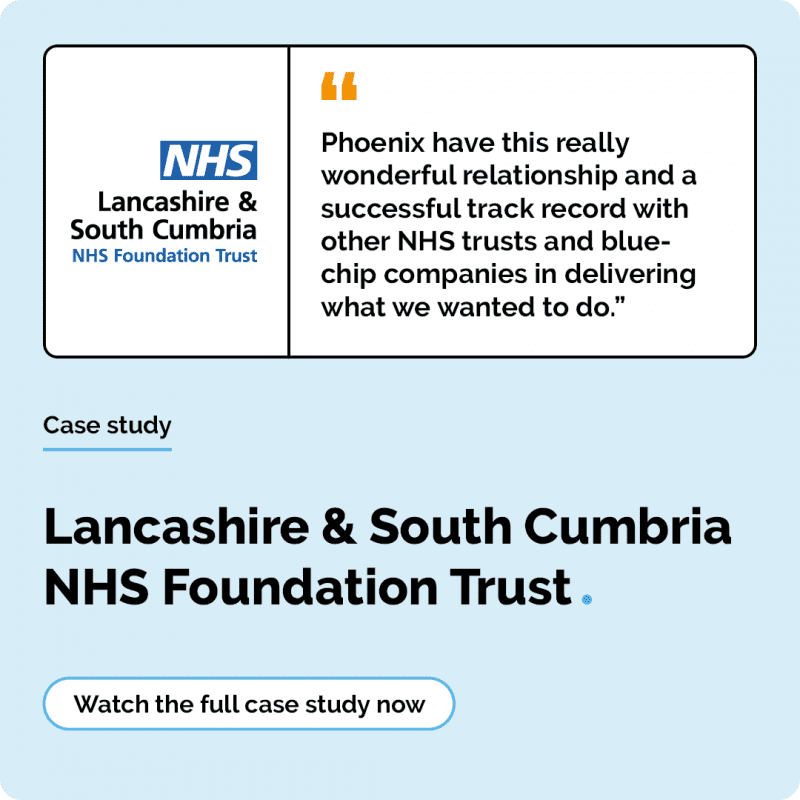
We have case studies demonstrating outcomes for some of the UK’s most complex NHS environments, including our work with Lancashire and South Cumbria ICB, where Azure solutions unified several healthcare systems into a single platform to improve data management and patient outcomes.
End-to-end support.
We’re not just a reseller. We provide data strategy consultancy, platform design and build, ongoing support, and managed services, so the solutions we recommend actually get used.

Ready to turn your NHS data into operational decisions?
Whether you’re starting from scratch or looking to get more from an existing data estate, our healthcare specialists are here to help.
You can also email us at [email protected] or call 01904 562200 – whatever works best for you.